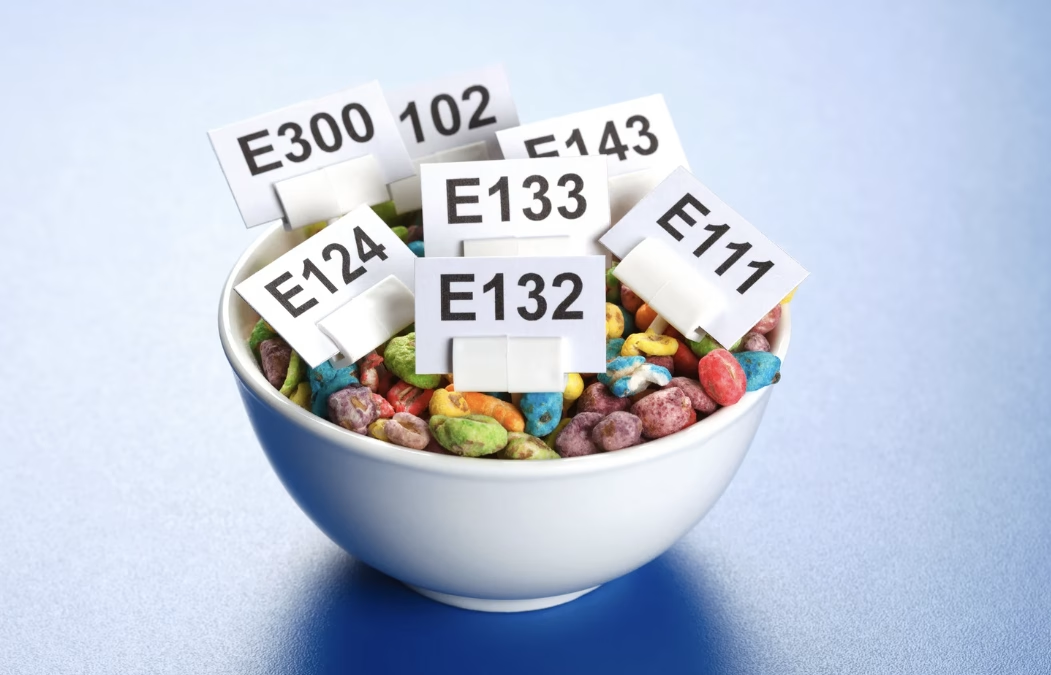
Everything you need to know about food additives!
What is a food additive?
Health Canada defines a food additive as «Any chemical substance added to a food during preparation or prior to storage, which becomes part of the food or modifies its characteristics to achieve the desired technical effect. Alternatively, it may be added to food to preserve its nutritional value, increase its shelf life or enhance its appearance, to facilitate processing, packaging or storage».».
What are food additives used for?
Food additives have two main functions.
One is aimed at health conservation food while the second is aimed more at transform the food or manufacture it artificially.
Function 1: Food safety
The addition of certain additives is essential to ensure food safety over a longer period of time, thus limiting waste and health risks.
Examples of additives to aid preservation:
- Sorbate and benzoate
- Ascorbic acid (vitamin C)
- Propionate
- Citric acid
- Lactic acid
- Essential oils
- Spices
- Natamycin
- Nisine
To date, the addition of the above-mentioned agents poses no known health risk. They can be used to increase the durability of fresh foods, or to modify and slightly improve their sensory qualities over the long term to ensure their preservation.
However, there are others, such as nitrite/nitrates and sulfites/sulfates, whose dangers, if consumed routinely, are reported by studies.
In fact, there is no such thing as a perfect preservative in terms of both health and human safety. Only very small doses of each can be used. As a result, the use of a single preservative is generally not sufficient to preserve a product completely and for a long time. This is why the industry combines various preservatives in addition to other means of preservation (e.g. refrigeration, freezing, canning, vacuum-packing, dehydration, addition of sugar and salt).
Function 2: Food processing
Other additives are used to create a food in terms of color, taste, texture and even smell.
Have you ever noticed that some foods taste, smell and even have colors that are impossible to find in nature? Well, that's a good indicator that they've been tailor-made.
Many ultra-processed foods would be beige, odorless and bland in the mouth without the addition of these numerous palatable additives.
Ultra-processed products contain a multitude of additives to conceal undesirable sensory properties, or to enhance the sensory properties of products to make them more attractive and tasty, as well as improving their smell and texture.
These include :
- Aromas
- Taste enhancers
- Colorants
- Emulsifiers
- Thickening agents
- Sweeteners
The combination of several of these additives creates ultra-palatable and very tasty foods!
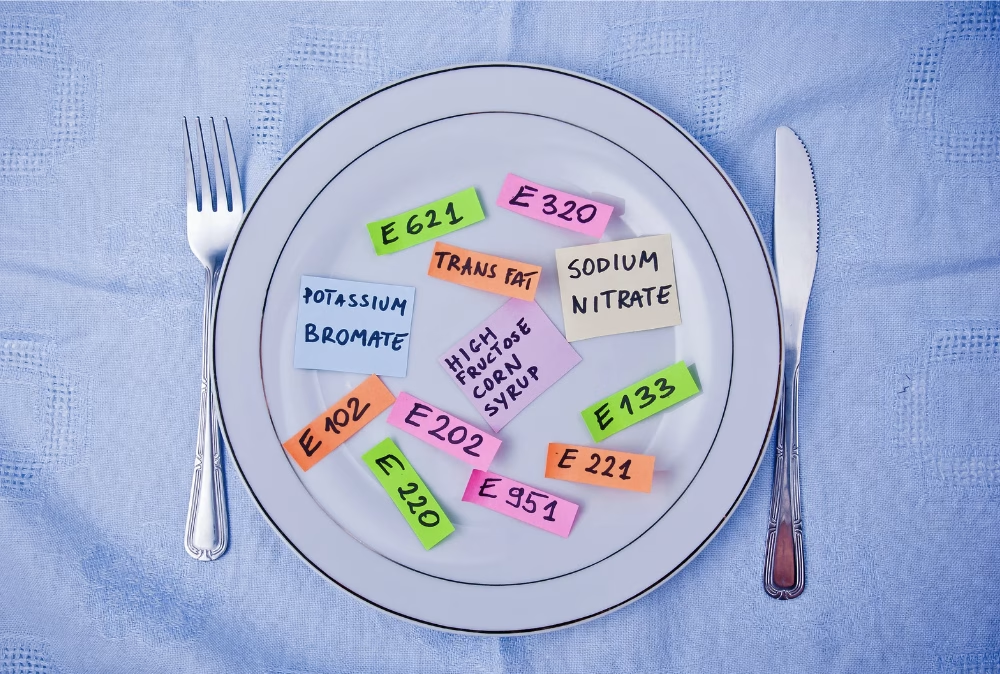
Tables of some common additives
Flavors
Natural aroma, fruit, from coffee, from salt /Aromas artificials and synthetics
Taste enhancers
Glycine
Flavor enhancer in soups, sauces and cold meats. Also used to mask the aftertaste of saccharin. No known hazards. No acceptable daily intake.
Glutamic acid and monosodium glutamate
Flavor enhancer that imparts a salty, Chinese buffet taste to foods. Acceptable daily intake (30 mg/kg) and prohibited for use in infant food. Possible allergy. Its link to the development of certain neurodegenerative diseases is questioned.
Sodium aspartame
Sweetener with 200 times the sweetening power of sugar. It is used in a wide variety of products, including those bearing the sugar-free label. The breakdown of aspartame leads to the production of the amino acid phenylalanine, and should therefore be avoided by those suffering from phenylketonuria. At present, various health effects are associated with aspartame, but these remain highly controversial. Consumption below the tolerable daily intake (TDI) is currently considered acceptable and safe (40 mg/kg).
Attractive colorants
Curcumin
Natural yellow colorant. No known risk to date, but the maximum daily dose (3 mg/kg) can easily be exceeded in a diet rich in ultra-processed foods.
Tartrazine, Alluza red, Sun yellow FCF
Avoid. Risk of intolerance and allergy, plus potential endocrine disruptor.
Emulsifiers and thickeners (palatability)
Lecithin
Texturizing agent for people allergic to soy (soy lecithin).
Disodium diphosphate
Texturizing agent, likely to increase blood phosphate levels, thus increasing the risk of cardiovascular disease and renal failure. Acceptable daily intake 40 mg/kg.
Polysorbate 20-40-60-80
Synthetic texture agent produced from sorbitol. Not recommended. Some studies on mice suggest that this additive increases intestinal permeability, favoring inflammatory bowel disease, while disturbing the balance of the intestinal microbiota (dysbiosis), increasing inflammation and the risk of colon cancer.
Monostearin, lactoglyceride
Texturing agents. Not recommended. Some studies on mice suggest that this additive may increase intestinal permeability, favoring inflammatory bowel disease, while disturbing the balance of the intestinal microbiota (dysbiosis), increasing inflammation and the risk of colon cancer.
Tartrate
Texturing agent in many flavored dairy products, breads, pastries and cookies. This additive was banned in Europe in 2024.
Xanthan gum, locust bean gum, arabic gum
These gums, produced by the fermentation of sugars by bacteria, are used as thickeners. They can cause variable gastrointestinal discomfort (e.g. bloating, flatulence, laxative effects) depending on individual tolerance.
Carbomethylcellulose, cellulose
Texturizing agent widely used in the food industry. Excessive consumption can lead to digestive disorders (e.g. constipation or diarrhoea). Consumption of this texturizing agent could potentially increase intestinal permeability, favoring inflammatory bowel disease as well as cardiovascular and metabolic risks.
Carrageenan
Vegetable texture agent derived from seaweed. Colorless, odorless, tasteless and non-digestible, it is used as a thickener and gelling agent. A fraction of this carbohydrate chain may cross the intestinal barrier and increase the risk of colon cancer. However, data on this point are still contradictory.
Sweeteners
Polydextrose, sorbitol, mannitol, xylitol, lactitol, isomalt, erythritol
Sweeteners naturally present in certain plants. They provide a sweet taste and are anti-cari. Polyols are FODMAPs that can cause gastrointestinal discomfort in sensitive individuals (e.g. diarrhea, flatulence, bloating).
Sucralose, acesulfame-K, aspartame, saccharin, stevia
Intense sweeteners, i.e. very high sweetening power, used in many products, drinks and supplements. Sweeteners are highly controversial! At present, there is insufficient evidence to establish a causal link between sweetener consumption and adverse health effects. Daily doses consumed are considered safe.
How to find them?
The ingredient list, again! Consulting the ingredients list is the only way to assess whether a food contains a few or a lot of food additives.
There are also a number of tools available to the general public, providing information on the conditions of use of additives.
References
- Lacasse D. Introduction to food microbiology (revised edition). (2021). Éditions Saint-Martins.
- Moubarac, J. C., Batal, M., Martins, A. P., Claro, R., Levy, R. B., Cannon, G., & Monteiro, C. (2014). Processed and ultra-processed food products: consumption trends in Canada from 1938 to 2011. Canadian journal of dietetic practice and research: a publication of Dietitians of Canada. Canadian journal of dietetic practice and research: a publication of Dietitians of Canada, 75(1), 15-21. https://doi.org/10.3148/75.1.2014.15
- Monteiro, C, Cannon, G. Lawrence, M, Da Costa Louzada, M. Pereira Machado, P. (2019). Ultra-processed foods, diet quality, and health using the NOVA classification system. Food and Agriculture Organization of the United Nations. https://openknowledge.fao.org/server/api/core/bitstreams/5277b379-0acb-4d97-a6a3-602774104629/content
- Popkin, B. (2019). Ultra-processed foods's impacts on health. Food and Agriculture Organization of the United Nations. https://openknowledge.fao.org/server/api/core/bitstreams/39d6f1db-c162-416a-8629-b47b5e3a0725/content
- Government of Canada. Food Additives List. Health Canada. https://www.canada.ca/fr/sante-canada/services/aliments-nutrition/salubrite-aliments/additifs-alimentaires/listes-autorises.html
- UFC que choisir. Food additives evaluation. https://www.quechoisir.org/comparatif-additifs-alimentaires-n56877/
- Magnuson, B. A., Roberts, A., & Nestmann, E. R. (2017). Critical review of the current literature on the safety of sucralose. Food and chemical toxicology: an international journal published for the British Industrial Biological Research Association, 106(Pt A), 324-355. https://doi.org/10.1016/j.fct.2017.05.047
- World Health Organization, Nutrition and Food Safety (NSA). Health effects of sugar-free sweetener use: systematic review and meta-analysis. (April 2022). 210 pages. Reference : 978-92-4-004642-9 https://www.who.int/publications/i/item/9789240046429
 French
  English