What are bacteria?
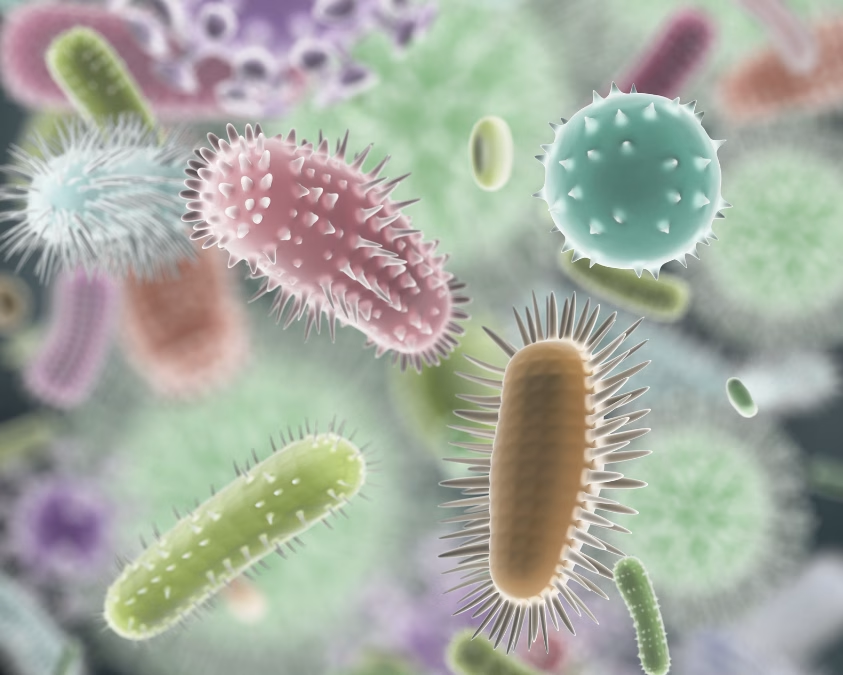
Microbiologically speaking, bacteria are tiny, single-celled organisms of various shapes, colors and characteristics. They are ubiquitous in everyday life and essential to life itself.
Bacteria: useful creatures!
Bacteria are remarkably useful, whether in the manufacturing of many of today's must-try foods (e.g. bread, yoghurt, cheese, chocolate) and beverages (e.g. wine, beer, coffee). They also play an important role in the pharmaceutical and agri-food industries. Did you know that many additives, preservatives and flavor enhancers are produced using bacteria?

Bacteria and microbiota
Bacteria make up, in part, what is known as the microbiota. Every human being carries more than 30 trillion micro-organisms throughout the body. They can be found, among other places, on the epidermis of the skin, in the respiratory tract, in the stomach and in the intestines. digestive tract, The digestive tract is where most microbial communities are found. The digestive tract is where most microbial communities are found.
Most of the bacteria present are commensal bacteria, In other words, without benefit or inconvenience. Others act mutually, i.e. they benefit the host! For example, intestinal bacteria help digest dietary fiber.
The intestinal microbiota
The intestinal microbiota consists of all the bacteria, viruses and yeasts living in the intestinal environment. We're talking about 100,000 billion micro-organisms. The composition of the intestinal microbiota is unique to each individual, and depends on a number of factors such as: genetics, environment, diet and exercise.’power supply, stress, physical activity and medication.
The majority of commensal species that inhabit the intestinal tract are the Firmicutes, Bacteroidetes, Proteobacteria and Actinobacteria.
A «healthy» microbiota is populated by an abundance of diverse micro-organisms.
On the other hand, in the event of bacterial imbalance (called dysbiosis), this creates a more inflammatory profile. This bacterial profile is observed in many chronic diseases such as obesity and rheumatological diseases (arthritis, osteoarthritis).
Some important functions of bacteria in the microbiota
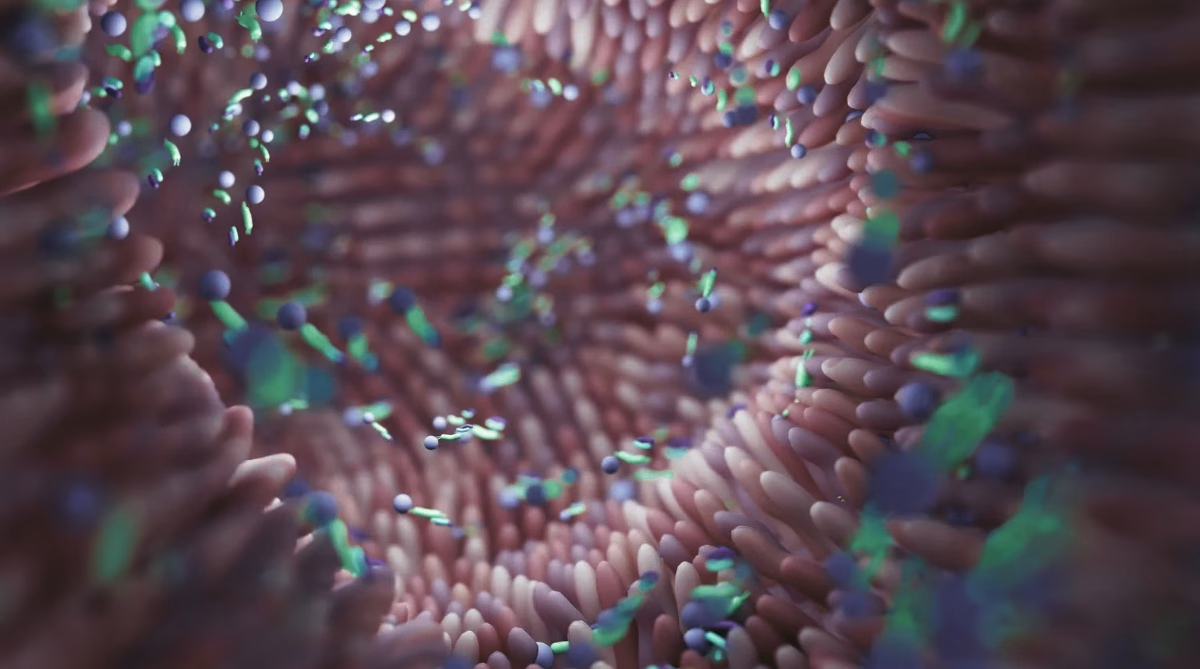
The microbiota has several important functions! In fact, the intestinal microbiota has the capacity to break down indigestible sugars like fiber, promotes nutrient absorption and participates in the synthesis of certain vitamins, neurotransmitters and hormones that influence a multitude of facets of physiological and psychological health.
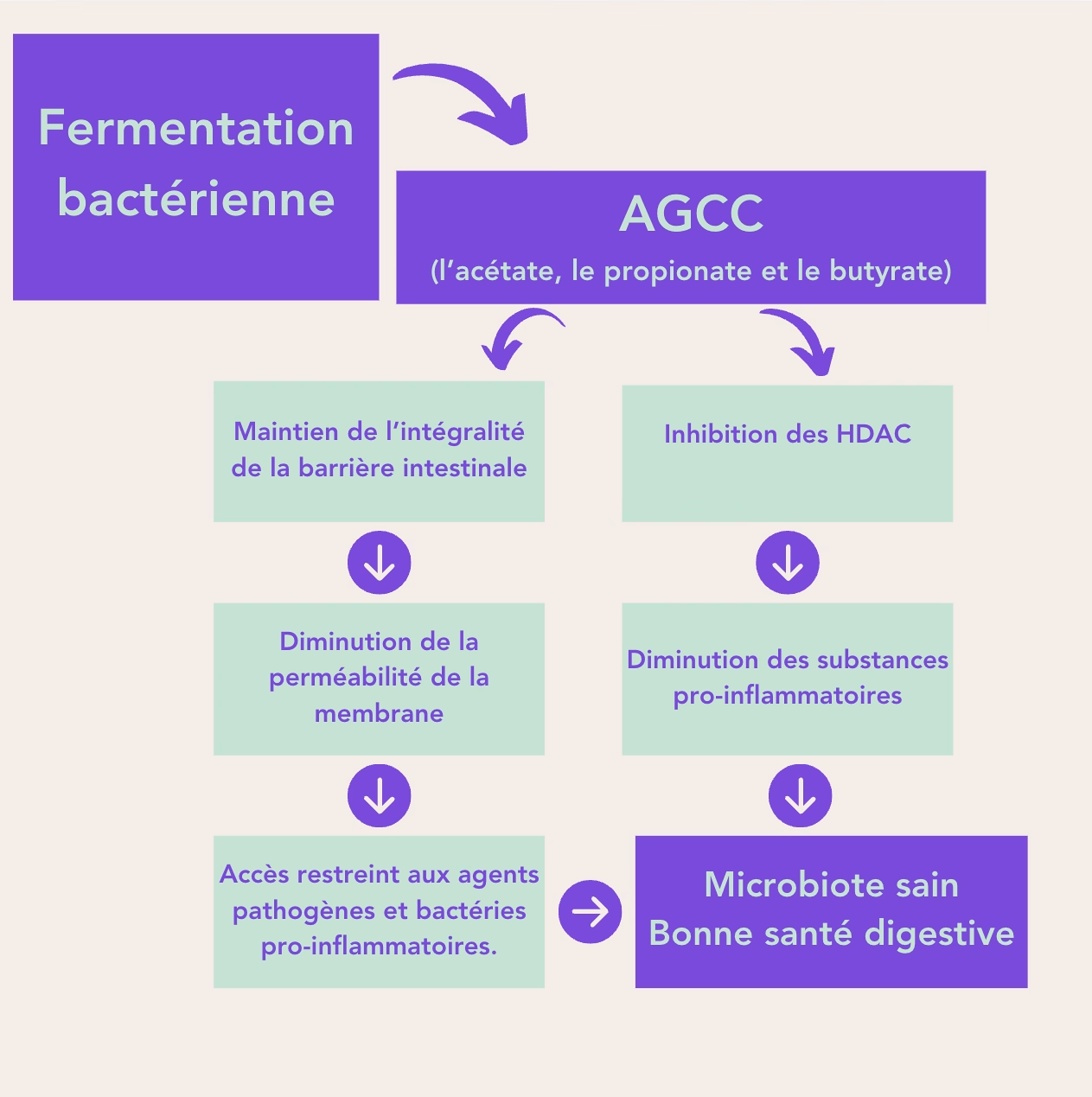
In response to a balanced and diversified diet, these bacteria release short-chain fatty acids (SCFA) following the fiber fermentation. These SCFAs supply energy to cells, while also providing beneficial immune and metabolic effects. In fact, these molecules contribute to reduce pro-inflammatory substances and ensure the integrity of the intestinal barrier.
In fact, this intestinal barrier is very important for overall intestinal health. By having tight junctions, the intestine selectively allows ions, nutrients and water to pass through, while limiting the entry of pathogenic substances. So, in the case of increased intestinal permeability (leaky gut) undesirable substances can penetrate, causing dysbiosis within the microbiota.
Bad bacteria«
Bad bacteria« are pathogenic bacteria. They can be contracted via food, water or another human being, causing toxi-infections and digestive symptoms.
Examples of pathogenic bacteria: Salmonella, Listeria, C. botulinium, E. Coli, Campylobacter, H. Pylori
Aim for healthy eating!
A healthy, balanced and diversified diet is an important factor for a healthy microbiota!
Nutritional care can also be useful in tailoring recommendations for a healthy microbiota!
References:
- Frontiers in endocrinology, 13, 1025706. https://doi.org/10.3389/fendo.2022.1025706
- Cronin P, Joyce SA, O'Toole PW, O'Connor EM. Dietary Fibre Modulates the Gut Microbiota. Nutrients. 2021; 13(5):1655. https://doi.org/10.3390/nu13051655
- Guan Z-W, Yu E-Z, Feng Q. Soluble Dietary Fiber, One of the Most Important Nutrients for the Gut Microbiota. Molecules. 2021; 26(22):6802. https://doi.org/10.3390/molecules26226802
- Lacasse D. Introduction to food microbiology (revised edition). (2021). Éditions Saint-Martins.
- Liang, S., Wu, X., & Jin, F. (2018). Gut-Brain Psychology: Rethinking Psychology From the Microbiota-Gut-Brain Axis. Frontiers in integrative neuroscience, 12, 33. https://doi.org/10.3389/fnint.2018.00033
- O'Grady, J., Shanahan, F. Dietary Fiber and Gastrointestinal Disease: an Evolving Story.Curr Gastroenterol Rep 20, 59 (2018). https://doi.org/10.1007/s11894-018-0667-0
- O'Grady, John; Shanahan, Fergus. Macronutrients, microbiome and precision nutrition. Current Opinion in Gastroenterology 37(2):p 145-151, March 2021. | DOI: 10.1097/MOG.0000000000000705. ADD WEB LINK
- Pimentel M, Saad RJ, Long MD, Rao SSC. ACG Clinical Guideline: Small Intestinal Bacterial Overgrowth. Am J Gastroenterol. 2020 Feb;115(2):165-178. https://pubmed.ncbi.nlm.nih.gov/32023228/
- Song Z, Song R, Liu Y, Wu Z, Zhang X. Effects of ultra-processed foods on the microbiota-gut-brain axis: The bread-and-butter issue. Food Res Int. 2023 May;167:112730. doi: 10.1016/j.foodres.2023.112730. Epub 2023 Mar 21. PMID: 37087282. https://pubmed.ncbi.nlm.nih.gov/37087282/
- Thursby, E., & Juge, N. (2017). Introduction to the human gut microbiota. The Biochemical journal, 474(11), 1823-1836. https://doi.org/10.1042/BCJ20160510
- Xiong, R. G., Li, J., Cheng, J., Zhou, D. D., Wu, S. X., Huang, S. Y., Saimaiti, A., Yang, Z. J., Gan, R. Y., & Li, H. B. (2023). The Role of Gut Microbiota in Anxiety, Depression, and Other Mental Disorders as Well as the Protective Effects of Dietary Components. Nutrients, 15(14), 3258. https://doi.org/10.3390/nu15143258
 French
  English