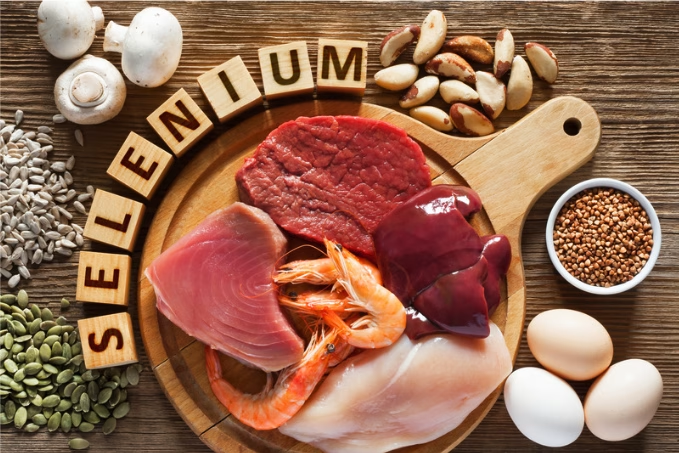
Overview of selenium: an important trace element for digestive health
Selenium is an essential mineral, albeit in very small quantities. The recommended daily intake for the majority of the population is 55 mcg (µg). This mineral plays an important role in a number of physiological processes, notably in relation to intestinal health.
Dietary sources of selenium
In nature, selenium is mainly found in proteins, bound to either methionine or cysteine, two amino acids.
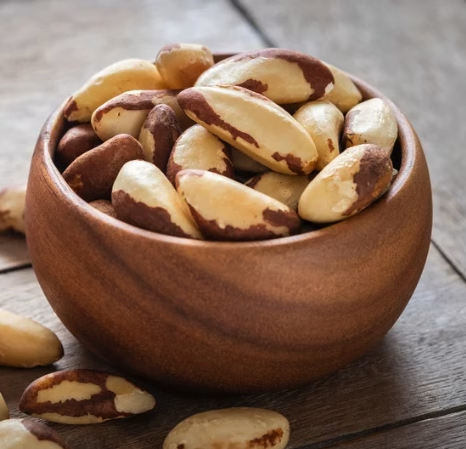
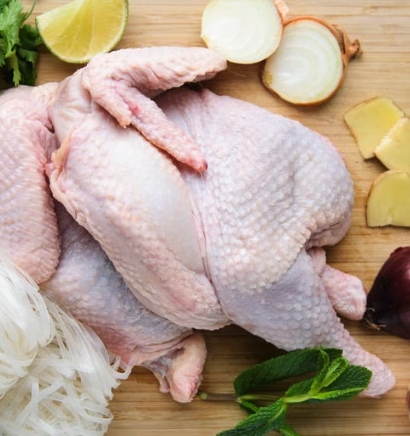
Food sources rich in selenium include animal proteins such as sardines, tuna, white fish, chicken, eggs and cottage cheese. A notable plant source is the Brazil nut, which contains a significant amount of selenium to meet daily nutritional requirements. Selenium is also found in whole grains, seeds and nuts, but the amount varies according to the selenium content of the soil.

Selenium functions
Selenium contributes to the production of selenoproteins, proteins with antioxidant properties that support thyroid health, the immune system and the immune system. digestive health.
Adequate selenium intake enables optimal functioning of the enzyme glutathione peroxidase, an important antioxidant enzyme in the body against inflammation and oxidative stress. Selenium is involved in the prevention of anemia by preventing hemolysis (the bursting of red blood cells).
Selenium and disease
Selenium's antioxidant and anti-inflammatory role makes it an important factor in the prevention of various diseases and conditions characterized by inflammation and oxidative stress, such as diabetes, metabolic and cardiovascular diseases, cancer, neurodegenerative diseases and intestinal diseases.
Inadequate selenium intake therefore has a negative impact on the body's immune system and overall functions.
Conversely, excessive intake can lead to selenosis. This condition, resulting from excess selenium, is characterized by hair loss, weakened nails, fatigue, recurrent headaches and nausea, and diarrhea. Chronically, this condition leads to immune, liver, kidney, neurological and reproductive problems.



Selenium and digestive health
As you know, 70% of the immune system is found in the intestines.
In fact, the intestinal mucosa can be both an ideal entry point for pathogens and a protective barrier.
Ideally, the intestinal mucosa should be sufficiently permeable to allow the absorption of substances of interest, but sufficiently impermeable to prevent the passage of bacteria and other pathogenic substances.
In full of the intestinal barrier is modulated by various factors, including feeding. This feeds the good bacteria, which in turn release various metabolites, including short-chain fatty acids, known for their immune-boosting effect on the intestinal mucosa.
Selenium-rich foods are among those that can beneficially modulate the intestinal microbiota and thereby support the immune system.
What's in it for us?
A healthy microbiota optimizes selenium absorption. Optimizing this absorption enables the body to produce selenoproteins, proteins with antioxidant properties which, in turn, perform anti-inflammatory functions, helping to ensure the integrity of the intestinal mucosa.
Are supplements necessary?
In light of these immune benefits, it may be tempting to boost your immune system with a selenium supplement.
No study, To date, there is no evidence to support the benefits of selenium supplements in preventing heart disease or all cancers. It is therefore not recommended to take selenium supplements, unless you have a specific condition supported by a medical prescription. If in doubt about your dietary intake, consult a nutritionist.
Don't forget, supporting your immune health means adopting healthy eating habits as a whole including a varied, nutrient-rich diet!
Ideas rich meals at selenium
Sprinkle chopped Brazil nuts on yogurt, oatmeal, salads, etc.
Puree Brazil nuts in a food processor to make nut butter
Include Brazil nuts in your snack recipes (energy balls, muffins, patties, bars)
Include eggs on the menu (omelette, sandwich, frittata, quiche)
Put tuna on the menu (sandwiches, salads, patties, pasta)
Incorporate sardines into your menu (pâtés, galettes, croquettes)
Include white fish and chicken on the menu
Incorporate cottage cheese into meals or snacks
Selenium-rich recipes
Chicken stir-fry with vegetables and cashew nuts

Sautéed asparagus with almonds

Mini sardine pies

Apple and lentil bars
Carrot cake" energy balls

Fibre-rich egg salad sandwich

Strata vacuum fridge

Quinoa-crusted quiche

Senegalese-inspired fish

Tex-Mex crusted fish

Spicy tuna salad

Asian tuna salad

Tuna sandwich

Parsnip galette, herb and crab sauce

References
CDHF. How diet can support intestinal health and the immune system. Canadian Digestive Health Foundation. (April 2023). https://cdhf.ca/fr/comment-lalimentation-peut-elle-favoriser-la-sante-intestinale-et-le-systeme-immunitaire/
Dietitian of Canada. Spotlight on selenium. Unlookfood.(February 14, 2019). https://www.unlockfood.ca/fr/Articles/Elements-nutritifs-(vitamines-et-mineraux)/Pleins-feux-sur-le-selenium.aspx?aliaspath=%2fen%2fArticles%2fNutrients-(vitamins-and-minerals)%2fThe-scoop-on-selenium
Ferreira, R. L. U., Sena-Evangelista, K. C. M., de Azevedo, E. P., Pinheiro, F. I., Cobucci, R. N., & Pedrosa, L. F. C. (2021). Selenium in Human Health and Gut Microflora: Bioavailability of Selenocompounds and Relationship With Diseases. Frontiers in nutrition, 8, 685317. https://doi.org/10.3389/fnut.2021.685317
Health Canada. Dietary Reference Intakes Tables: Reference values for elements. (Updated December 18, 2023). https://www.canada.ca/fr/sante-canada/services/aliments-nutrition/saine-alimentation/apports-nutritionnels-reference/tableaux/valeurs-reference-relatives-elements.html
 French
  English