We know more and more about the consequences of an ultra-processed diet on cardiovascular and metabolic health.. More and more studies are demonstrating the effect of these foods on the intestinal microbiota!
The intestinal microbiota
The intestinal microbiota consists of all the bacteria, viruses and yeasts living in the intestine. It is made up of 100,000 billion micro-organisms. The composition of the intestinal microbiota is unique to each individual and depends on several factors, such as genetics, diet, stress and physical activity. A «healthy» microbiota is populated by an abundance of diverse microorganisms.
Ultra-processed foods and the microbiota
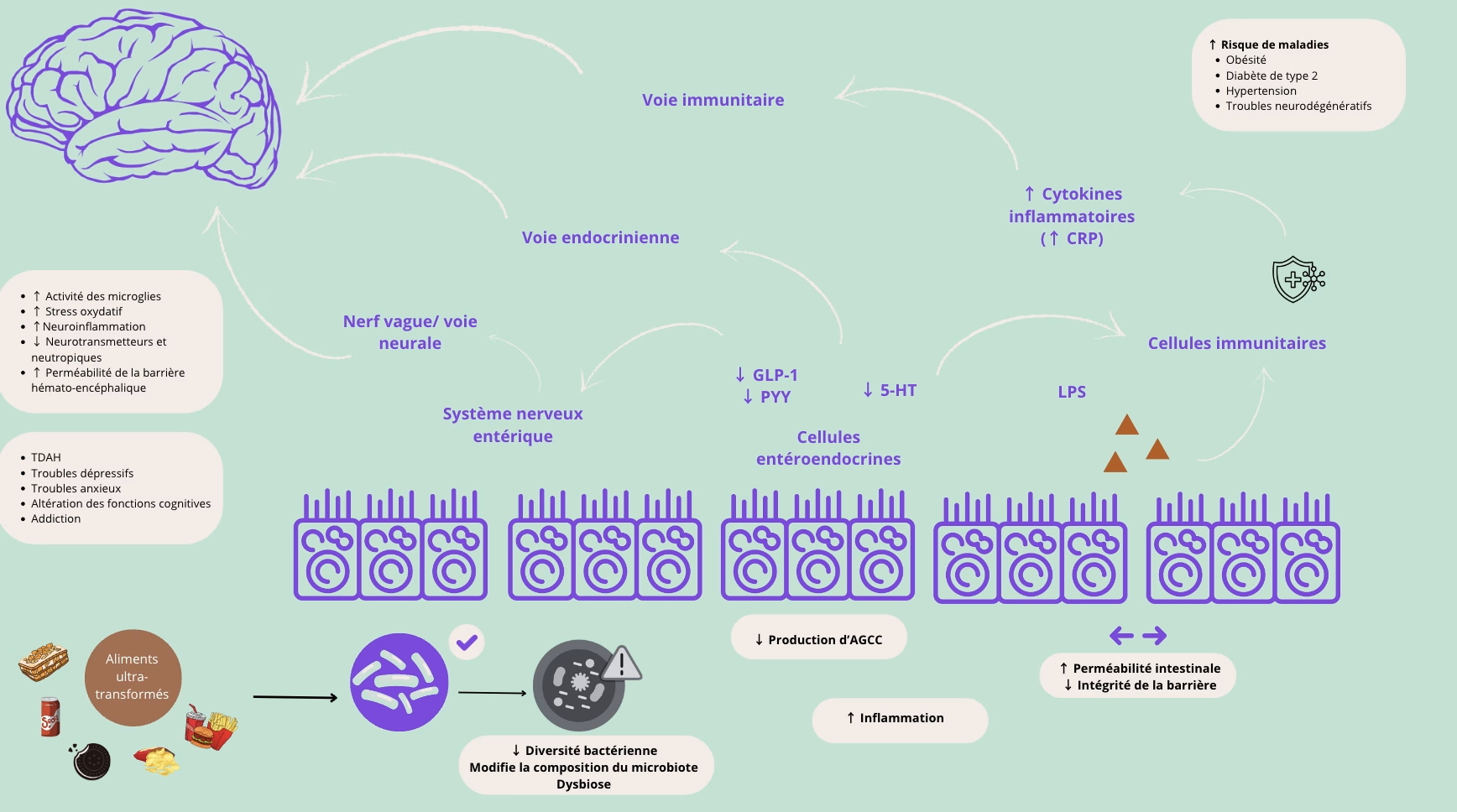
A diet low in nutrients beneficial to digestive health, such as fiber and healthy fats, and conversely high in foods rich in fats and refined sugars, alters the type of bacteria present in the digestive system. All this reduces the number of “healthy” bacteria and, consequently, the production of metabolites (such as AGCC) beneficial to the overall health and integrity of the intestinal mucosa.
The abundance of ultra-processed foods rich in sugars and fats favors certain “negative” bacteria, releasing undesirable metabolites with a pro-inflammatory effect that increases the permeability of the intestinal barrier. This widening gap between epithelial cells is a potential entry point for undesirable substances.

The gut-brain axis and ultra-processed foods
The bi-directional link between the gut and the brain is increasingly being studied. In fact, the brain and gut are linked to each other by various communication pathways.
The gut also contributes to the metabolism of neurotransmitters, which can subsequently modify brain function and behavior.
For example, L cells produce two appetite-regulating hormones (peptide-1 (GLP) and peptide YY (PYY)), which reduce gastric emptying and thus contribute to the satiety effect. In fact, studies have shown a decrease in GLP-1 and PYY when ultra-processed foods are consumed on a daily basis. This decrease, influencing hunger and satiety signals and insulin regulation, could contribute to the development of metabolic diseases.
The following diagram illustrates the cascade of events that can occur when the intestinal microbiota is modified by the consumption of foods rich in fat, sugar, salt and additives.
What's in it for us?
Food choices influence the composition of the intestinal microbiota, itself a modulator of digestive health. Current data demonstrate the pro-inflammatory effect of ultra-processed foods and their potentially harmful effects on overall health and the integrity of the intestinal barrier. In short, aiming for a variety of fresh, minimally processed, colorful and nutrient-rich foods can be beneficial!
References
- Cheng, Z., Zhang, L., Yang, L., & Chu, H. (2022). The critical role of gut microbiota in obesity. Frontiers in endocrinology, 13, 1025706. https://doi.org/10.3389/fendo.2022.1025706
- Fouesnard, M., Zoppi, J., Petera, M., Le Gleau, L., Migné, C., Devime, F., Durand, S., Benani, A., Chaffron, S., Douard, V., & Boudry, G. (2021). Dietary switch to Western diet induces hypothalamic adaptation associated with gut microbiota dysbiosis in rats. International journal of obesity (2005), 45(6), 1271-1283. https://doi.org/10.1038/s41366-021-00796-4
- Fulton, S., Décarie-Spain, L., Fioramonti, X., Guiard, B., & Nakajima, S. (2022). The menace of obesity to depression and anxiety prevalence. Trends in endocrinology and metabolism: TEM, 33(1), 18-35. https://doi.org/10.1016/j.tem.2021.10.005
- Gentile, F., Doneddu, P. E., Riva, N., Nobile-Orazio, E., & Quattrini, A. (2020). Diet, Microbiota and Brain Health: Unraveling the Network Intersecting Metabolism and Neurodegeneration. International journal of molecular sciences, 21(20), 7471. https://doi.org/10.3390/ijms21207471
- Guo, M., Peng, J., Huang, X., Xiao, L., Huang, F., & Zuo, Z. (2021). Gut Microbiome Features of Chinese Patients Newly Diagnosed with Alzheimer's Disease or Mild Cognitive Impairment. Journal of Alzheimer's disease : JAD, 80(1), 299-310. https://doi.org/10.3233/JAD-201040
- Liang, S., Wu, X., & Jin, F. (2018). Gut-Brain Psychology: Rethinking Psychology From the Microbiota-Gut-Brain Axis. Frontiers in integrative neuroscience, 12, 33. https://doi.org/10.3389/fnint.2018.00033
- Mariath, A. B., Machado, A. D., Ferreira, L. D. N. M., & Ribeiro, S. M. L. (2022). The possible role of increased consumption of ultra-processed food products in the development of frailty: a threat for healthy ageing?. The British journal of nutrition, 128(3), 461-466. https://doi.org/10.1017/S0007114521003470
- Martínez Leo, E. E., & Segura Campos, M. R. (2020). Effect of ultra-processed diet on gut microbiota and thus its role in neurodegenerative diseases. Nutrition (Burbank, Los Angeles County, Calif.), 71, 110609. https://doi.org/10.1016/j.nut.2019.110609
- Mooli, R. G. R., Mukhi, D., Pasupulati, A. K., Evers, S. S., Sipula, I. J., Jurczak, M., Seeley, R. J., Shah, Y. M., & Ramakrishnan, S. K. (2022). Intestinal HIF-2α Regulates GLP-1 Secretion via Lipid Sensing in L-Cells. Cellular and molecular gastroenterology and hepatology, 13(4), 1057-1072. https://doi.org/10.1016/j.jcmgh.2021.12.004
- Song, X., Wang, L., Liu, Y., Zhang, X., Weng, P., Liu, L., Zhang, R., & Wu, Z. (2022). The gut microbiota-brain axis: Role of the gut microbial metabolites of dietary food in obesity. Food research international (Ottawa, Ont.), 153, 110971. https://doi.org/10.1016/j.foodres.2022.110971
- Thursby, E., & Juge, N. (2017). Introduction to the human gut microbiota. The Biochemical journal, 474(11), 1823-1836. https://doi.org/10.1042/BCJ20160510
- Wang, H. X., & Wang, Y. P. (2016). Gut Microbiota-brain Axis. Chinese medical journal, 129(19), 2373-2380. https://doi.org/10.4103/0366-6999.190667
 French
  English