
August 2024 Update
Are you interested in digestive health? If so, you've probably already heard about the potentially beneficial effect of fermented foods on the gut microbiota due to the presence of «live» bacteria.
These include miso, kimchi, sauerkraut, kefir, tempeh and other lacto-fermented vegetables.
A question that comes up often: «What do you think of KOMBUCHA?»
Sure, the growing popularity of fermented foods has contributed to the booming success of Quebec's kombucha industry. But first, what's behind such interest in fermented products? Well, the literature on the subject shows potentially beneficial health effects, particularly in relation to the impact of fermented products on the microbiota. So, are there advantages to incorporating this fermented beverage into your daily hydration habits? And how can you make a wise choice among an ever-increasing range of products? You'll find answers to your questions in this article!
What is kombucha?
Consumed for over 2000 years, Kombucha was popularized in Quebec For a few years now. By definition, it is a fermented, tangy drink made from tea, sugar, bacteria, and yeast. The more curious among you have surely heard of the kombucha «mother,» a colony of bacteria and yeast added to the tea to kickstart its fermentation. This latter part makes the process both mysterious, a bit repulsive to some, and quite fascinating at the same time!
Simply put, kombucha is a sweetened, fermented tea!
Did you say sweet?
Yes, sugar is an integral part of making kombucha. In fact, this is what polarizes expert opinions regarding it. On the one hand, it is true that kombucha is a «living» beverage» with so-called probiotic properties. However, it cannot be labeled «probiotic» according to the official definition, as the quantities and types of microorganisms are not standardized from one bottle to another. On the other hand, it is a sweetened beverage. Daily consumption of sweetened beverages contributes to the increasing prevalence of certain chronic diseases, such as obesity. Follow the advice below carefully!
A second-hand drink
In light of this information, kombucha is an interesting beverage to the extent that it is used as a substitute for other sugary drinks. For example, if you usually drink juice, iced tea, or a soda at lunchtime, it would indeed be worthwhile to swap these for kombucha. However, if you usually hydrate with water, keep doing so! There's nothing to stop you from enjoying your favorite fermented tea on occasion. Besides, incorporating kombucha into mocktails is a very good idea!

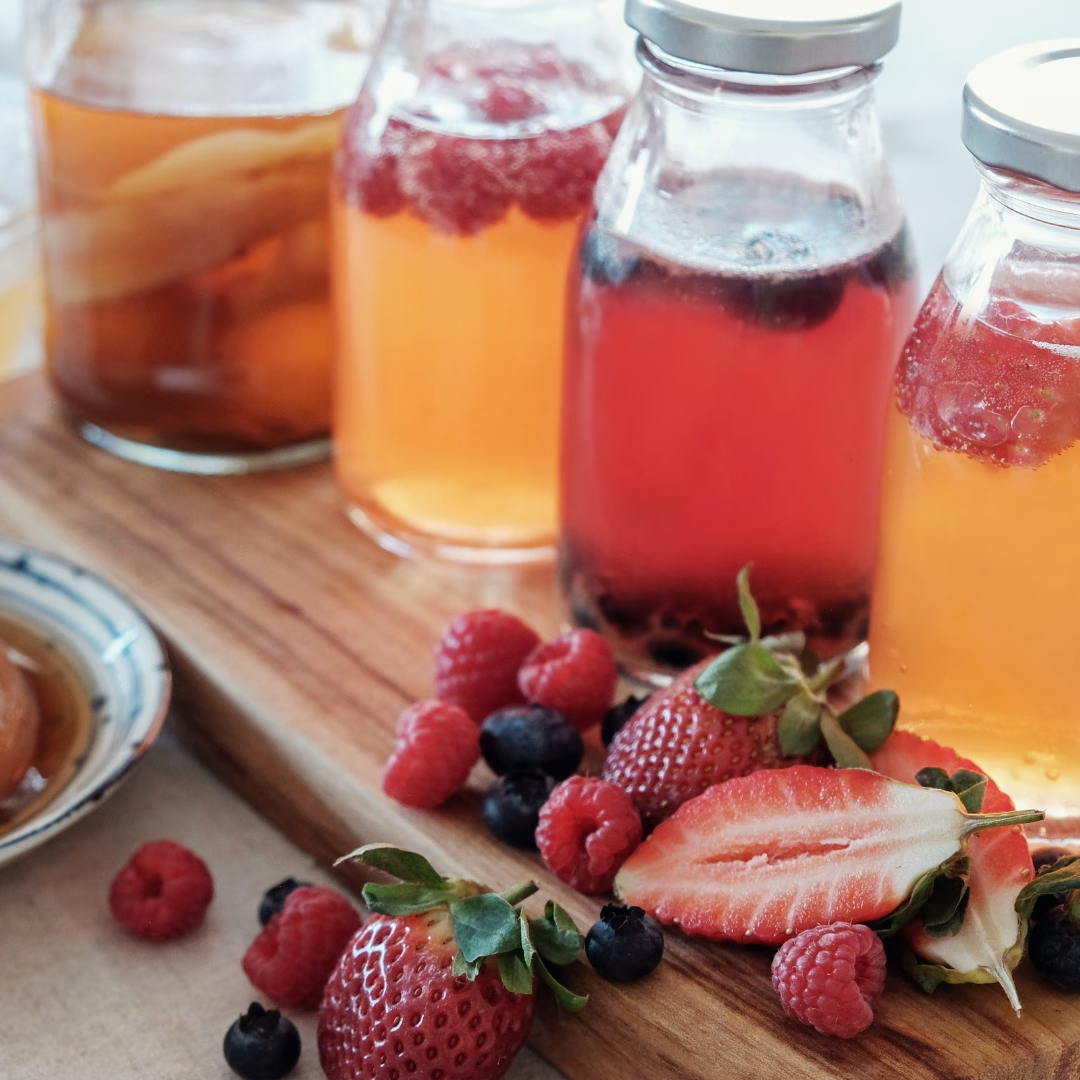

How to choose your kombucha?
The offer is now very generous on tablets. Obviously, as with all food products, the nutritional interest will vary from one product to another. As you've probably guessed, during the final selection, we'll be particularly interested in the sugar content of the beverage. On the other hand, rest assured since some of this sugar is consumed by bacteria and then transformed during fermentation.
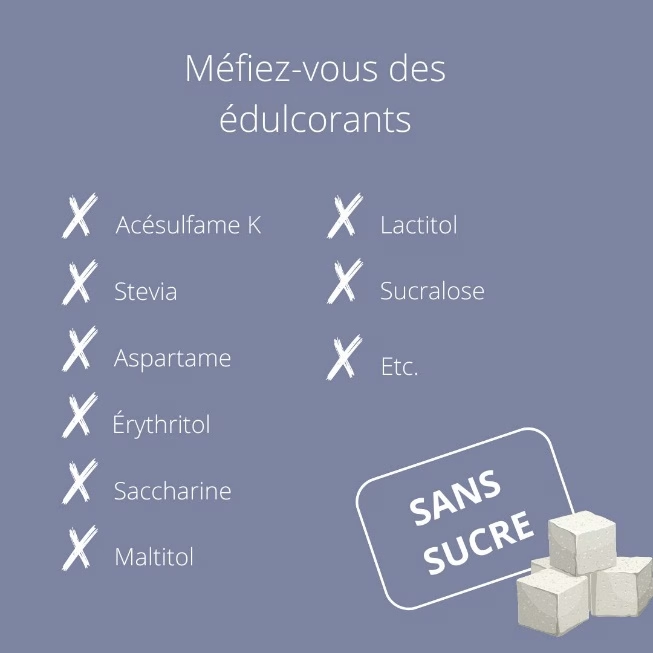
Beware of companies that replace sugar with sweeteners. We prefer a small amount of sugar to the addition of these «fake sugars», which have such a high sweetening power that they only maintain your craving for sweet foods.
Your best work tool is undoubtedly the ingredient list. Watch out for the following terms: acesulfame K, stevia, aspartame, erythritol, saccharin, maltitol, lactitol, sucralose. We want to avoid them! (place the image of sweeteners after this text!)
Finally, in this product category, it may be relevant to validate if the tea used for the beverage preparation is organic. It's a nice little bonus!
Warning: pregnant and breastfeeding women
Certain elements do not mix well with these two situations: alcohol and caffeine.
Fermentation is also a challenge, especially at such an important moment in life. Based on the risk analysis, wait a few more months before returning to your favorite kombucha.
Regarding alcohol, all kombucha, even «non-alcoholic» versions, contain about one-tenth the amount of alcohol found in regular beer. Some are even very high in alcohol and can range from 1 to 8% alcohol. Homemade kombucha falls within this range with 3% alcohol. Although there is no minimum safe dose during pregnancy yet, major medical associations recommend abstaining. The same applies to breastfeeding, although it is suggested, if the desire for a drink is strong, to have it immediately after nursing and wait 2-3 hours before the next feeding.
Regarding caffeine, the amount per cup (250 ml) of kombucha is estimated at 30-40 mg. During pregnancy, it is recommended not to exceed 200 mg per day, which includes your morning coffee, chocolate, dark sodas, tea, and... kombucha.
In brief
Kombucha is an interesting fermented beverage to incorporate occasionally for its unique taste as well as its potential benefits for gut microbiota health. Be mindful of their sugar content and avoid sweeteners for healthier choices!
References
Balasubramanian et al. (2024) Fermented foods: Harnessing their potential to modulate the microbiota-gut-brain axis for mental health. Neurosci Biobehav Rev. Mar;158:105562 https://pubmed.ncbi.nlm.nih.gov/38278378/
Dimidi et al. (2019) Fermented Foods: Definitions and Characteristics, Impact on the Gut Microbiota and Effects on Gastrointestinal Health and Disease. Nutrients Aug 5;11(8):1806 https://pubmed.ncbi.nlm.nih.gov/31387262/
Kapp and Sumner (2019) Kombucha: a systematic review of the empirical evidence of human health benefit. Ann Epidemiol Feb;30:66-70. https://pubmed.ncbi.nlm.nih.gov/30527803/
ISAPP. Fermented Foods. 2020. https://isappscience.org/for-scientists/resources/fermented-foods/
Monash University. FODMAP Blog. Fermented foods and FODMAPS. 2017 https://www.monashfodmap.com/blog/fermented-foods-and-fodmaps/
 French
  English