
For ease of reference, figures in brackets refer to the reference numbers appended to this document.
Vitamin D (vitD) has been the subject of much publication and research in recent years! Let's take a look at the latest data on the subject and its potential implications for our overall health and for our health care system. microbial!
Several potential roles under study
Most people are aware of vitD's role in bone health (13), since it is considered to be the "friend" of calcium and phosphorus in the various bone processes! In fact, vitD is involved in the absorption and retention of these two minerals, which are essential for bone synthesis (7). VitD is also essential for the normal development and growth of muscle fibres (7).
Several studies report that the implications of vitD go far beyond bone health (6,7,9)! In fact, many of the body's organs and tissues are thought to possess receptors for vitD (16), pointing to wider roles than have yet been confirmed!
Here are some of the roles vitD could be involved in and their explanations supporting these hypotheses:
- Reduction of cancer cell growth in laboratory studies (in vitro) (7)
- VitD is thought to play a role in regulating cell proliferation, differentiation and apoptosis (1, 7).
- Chemopreventive effects on colorectal cancer have been reported in several studies (12).
- Higher serum vitD levels have been associated with a reduced risk of colorectal cancer (vs. lower levels) (3)
- A meta-analysis of randomized controlled trials confirmed that vitD supplementation significantly reduced cancer-related mortality (12).
- Reducing the risk of cardiovascular diseases (MCV) (7)
- Studies observational report an association between serum vitD levels and the presence of CVD (7)
- Association in several health conditions such as mental health
- Observational studies have found that people suffering from depression had lower vitD levels (2, 7)
Adequate levels of vitD are necessary for normal neuropsychiatric brain function, among other things through its involvement with tryptophan (18).
- Observational studies have found that people suffering from depression had lower vitD levels (2, 7)
- Involvement in immune responses (7, 12)
- VitD is thought to play a key role in the adaptive and innate immune systems
- VitD receptors are expressed in various immune cells, including B and T lymphocytes (16).
- Reduction ofinflammation (1) : More details in the section below
And what role does the microbiota play in all this?
In several studies, vitD has been shown to play key roles in the health and composition of the microbiota (17). Firstly, vitD is involved in maintaining mucosal barrier function by promoting the expression of tight junction proteins (1, 3, 4, 14, 16). Indeed, vitD deficiency has been associated with disruption of intestinal barrierthe translocation of bacteria into the bloodstream and a inflammation systemic (1).
To better understand the terms used below - dysbiosis, intestinal barrier, intestinal permeability - and their implications, we invite you to review the blog article Leaky gut: what you need to know!
VitD is also known for modulating the intestinal microbiota and preventing bacterial proliferation (1). In fact, the active form of vitD (1,25(OH)2D) induces macrophages to produce antimicrobial peptides (4). In addition, vitD positively affects intestinal tissues by promoting immune responses by, among other things, inhibiting T-cell proliferation (1, 4, 16, 17). In addition, a number of studies have demonstrated an association between vitD deficiency and the development of dysbiosis (1). Indeed, in a systematic review of the role of vitD on gut microbiota in humans and animals, 12 of 14 studies reported an association between vitD and gut microbiota (1). In another systematic review of 25 human studies (14 intervention and 11 observational), vitD supplementation was associated with changes in microbial composition for Firmicutesthe Actinobacteria and Bacteroidetes (1, 2).
As an example, a study of 26 healthy, overweight adults evaluated the effect of vitD supplementation on the microbiota (1, 12, 14). The authors found that vitD supplementation increased microbial diversity in addition to an increase in the Bacteroidetes/Firmicutes ratio (associated with good intestinal health) and beneficial bacteria such as Bifidobacterium and Akkermansia(1, 12, 14).
Involvement of vitD in various intestinal diseases
In addition to its effect on the microbiota, several studies have focused on vitD's role in intestinal pathologies, such as irritable bowel syndrome (IBS) and inflammatory bowel diseases (IBD) including Crohn's disease and ulcerative colitis (11, 16, 18). In fact, a impairment vitD supplementation has been associated with several diseases of the gastrointestinal tract, including IBS and IBD (11, 16, 18). A review of the literature and meta-analysis demonstrated the efficacy of vitD supplementation in improving IBS, including intestinal symptoms and quality of life (18). Moreover, lower serum vitD levels are associated with a higher risk of surgery and hospitalization in IBD, in addition to a higher risk of thedisease activity for patients with Crohn's disease (11). Further studies are needed to establish the links between these health conditions and vitD! Nevertheless, various hypotheses have been put forward to explain their associations, including the effect on the microbiota (of course!) (11).

So how do you go about finding this precious vitD?
The production of vitD by skin is the main natural source of vitD. In fact, it is produced by the sun's ultraviolet B (UVB) rays (7). However, several factors influence its synthesis by the sun. Season of the year, skin pigmentation, latitude, use of sunscreen and clothing that covers the skin are just a few examples (7).
Thus, many sub-groups of individuals are more at risk such as (7-9) people :
- Aged. The body's ability to convert sunlight into vitD deteriorates with age;
- With darker skin;
- Wearing clothes that cover most of their body when outdoors;
- Little outdoors;
- Crohn's disease, ulcerative colitis or celiac disease. Conditions that alter the way the body absorbs fats, making it more difficult to absorb vitD;
- Having undergone bariatric surgery;
- On a very low-fat diet. Remember that vitD is fat-solublei.e. fat-soluble;
- Lives in the far north, far south or in cloudy climates. Low sun exposure.
What quantities are required?
The recommended dietary intake of vitD provides the daily amount required to maintain healthy bones and normal calcium metabolism in healthy individuals (7, 9). In fact, vitD deficiency leads to inadequate skeletal mineralization, which can lead to rickets in children and osteomalacia in adults (7).
The nutritional intake recommended by theInstitute of Medicine (IOM) for adults aged 19 and over is 600 IU (15 mcg) per day for men and women, and 800 IU (20 mcg) per day for adults over 70 (7).
In blood, the target 25(OH)D level is > 20-24 ng/mL (approx. 50-60 nmol/L) for maximum bone health (8).
Tolerable Upper Intake Level (UL), according to theInstitute of Medicine (IOM), is the maximum daily intake likely to cause adverse health effects. The UL for vitD for adults and children aged 9 and over is 4,000 IU (100 mcg) per day (7-9). You can't get this amount from the sun, but you can get it from food, especially in supplement form! Hypervitaminosis D leads to hypercalcemia and eventually to calcification of soft tissues, with consequent renal and cardiovascular damage (7).
What about science?
There is a scientific debate on how much vitD people need every day, and on optimal serum levels for disease prevention. For its part, theInstitute of Medicine (IOM) considered that there was insufficient evidence to establish a causal link between vitD and health benefits other than bone health (6, 7).
Here are some recommendations from different organizations:
- The Endocrine Society supplement 1,500-2,000 IU daily to achieve adequate serum vitD levels (6)
- Canadian Cancer Society 1,000 IU per day, to reduce the risk of cancer with low potential for harm (15)
- Osteoporosis Canada Daily vitD supplement throughout the year (10)
Healthy adults aged 19-50: Need 400 to 1,000 IU per day
Adults over 50 and young adults at high risk (osteoporosis, fractures, diseases impairing vitD absorption): Require 800 to 2,000 IU per day.
Health Canada A supplement of 400 IU per day for people aged 50 and over or for those who do not meet their needs through food. (13)
Let's take a look at the "those who don't meet their needs through food" section.
Few foods naturally contain vitD, although some are fortified with it.
Here are the main sources of vitD from food:
| Food sources | Quantity (per 100g serving) |
| Cod liver oil | 1290 IU per 15 ml serving |
| Swordfish | 1015 IU per 100 g serving |
| Rainbow trout | 645 IU per 100 g serving |
| Salmon | 272 IU per 100 g serving |
| Sockeye salmon | 570 IU per 100 g serving |
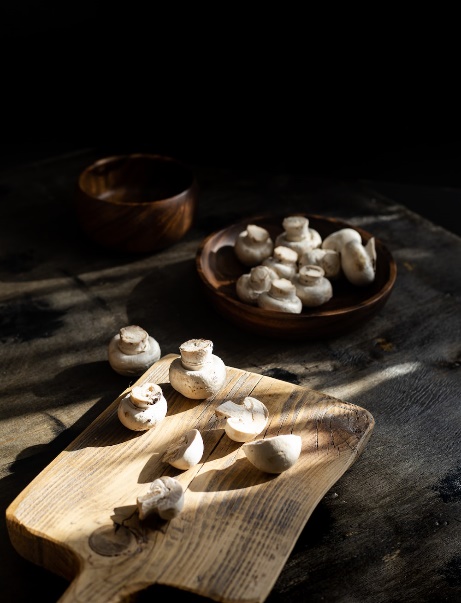
| Mushrooms exposed to UVB rays | 366 IU per 125 ml serving |
| Tuna | 60-140 IU per 100 g serving |
| Vitamin D-enriched milk and vegetable beverages | 90-105 IU per 250 ml serving |
| Sardines | 100 IU per 100 g serving |
| Enriched yoghurts | 52-60 IU per 175 ml serving |
| Enriched margarine | 50-80 IU per 10 ml serving |
| Beef liver | 48 IU per 100 g serving |
| Enriched kefir | 35 IU per 175 ml serving |
| Egg yolk | 32 IU per yellow |
| Vitamin D-enriched orange juice | 20 IU per 250 ml serving |
Salmon with beet
Salmon Poké Bowl
Refreshing salmon salad
Strata vacuum fridge
Layered oats and yogurt

Unless you consume every daycod liver oil, swordfish, rainbow trout or sockeye salmon (which is hard to imagine), you need combine In addition, some of these fish are high in mercury, and eating them every day is not recommended to reduce our exposure to heavy metals. What's more, some of these fish are high in mercury, and eating them every day is not recommended to reduce our exposure to heavy metals (5).
Let's take a few examples of combinations to reach approximately 600 IU per day:
- 1 portion salmon (not sockeye) + 1 portion sardines + 2 cups (500 ml) milk
- 1 portion of tuna + 1 cup (250 ml) fortified soy beverage + 1 fortified yogurt + 2 eggs + 1 cup (250 ml) orange juice + 6 shiitake mushrooms
- 1 liter (1000 ml) milk + 1 portion beef liver + 1 egg + ¾ cup (175 ml) enriched kefir + 2 teaspoons (10 ml) enriched margarine
What about you? Do you think you can meet your daily needs through diet alone?
If the answer is yes, so much the better!
If the answer is no, you may benefit from a vitamin D supplement.3. Unless otherwise advised, you should not exceed the UL of 4000 IU per day. Most supplements offer 1000 or 2000 IU per tablet. With a supplement, you'll get the potential benefits associated with vitD, to the delight of your gut bacteria and your overall health!
Talk to your doctor or your nutritionist.
References :
(1) Aggeletopoulou I, Tsounis EP, Mouzaki A, Triantos C. Exploring the Role of Vitamin D and the Vitamin D Receptor in the Composition of the Gut Microbiota. Front Biosci (Landmark Ed). 2023 Jun 14;28(6):116. https://pubmed.ncbi.nlm.nih.gov/37395032/
(2) Anglin RE, Samaan Z, Walter SD, McDonald SD. Vitamin D deficiency and depression in adults: systematic review and meta-analysis. Br J Psychiatry. 2013 Feb;202:100-7. https://www.ncbi.nlm.nih.gov/pmc/articles/PMC4011048/
(3) Bellerba F, Muzio V, Gnagnarella P, Facciotti F, Chiocca S, Bossi P, Cortinovis D, Chiaradonna F, Serrano D, Raimondi S, Zerbato B, Palorini R, Canova S, Gaeta A, Gandini S. The Association between Vitamin D and Gut Microbiota: A Systematic Review of Human Studies. Nutrients. 2021 Sep 26;13(10):3378. https://www.ncbi.nlm.nih.gov/pmc/articles/PMC8540279/
(4) Charoenngam N, Shirvani A, Kalajian TA, Song A, Holick MF. The Effect of Various Doses of Oral Vitamin D3 Supplementation on Gut Microbiota in Healthy Adults: A Randomized, Double-blinded, Dose-response Study. Anticancer Res. 2020 Jan;40(1):551-556. https://pubmed.ncbi.nlm.nih.gov/31892611/
(5) Government of Canada, Mercury in fish. Page consulted online: https://www.canada.ca/fr/sante-canada/services/aliments-nutrition/salubrite-aliments/contaminants-chimiques/contaminants-environnementaux/mercure/mercure-poisson.html
(6) Harvard T.H. Chan, The Nutrition Source, Vitamin D. Page consulted online: https://www.hsph.harvard.edu/nutritionsource/vitamin-d/
(7) Institute of Medicine (IOM) 2011. Dietary Reference Intakes for Calcium and Vitamin D. Washington, DC: The National Academies Press. https://pubmed.ncbi.nlm.nih.gov/21796828/
(8) Merck Manual, Vitamin D deficiency and dependence. Larry E. Johnson. Page consulted online: https://www.merckmanuals.com/fr-ca/professional/troubles-nutritionnels/carence-dpendance-et-toxicit-des-vitamines/carence-et-dpendance--la-vitamine-d#:~:text=Dansledficitsvrele,l’hyperparathyrodiesecondairenormale.
(9)National Institutes of Health (NIH), Vitamin D. Page consulted online: https://ods.od.nih.gov/factsheets/VitaminD-Consumer/
10) Osteoporosis Canada, Vitamin D. Page consulted online: https://osteoporosecanada.ca/vitamine-d/
(11) Pham VT, Dold S, Rehman A, Bird JK, Steinert RE. Vitamins, the gut microbiome and gastrointestinal health in humans. Nutr Res. 2021 Nov;95:35-53. doi: 10.1016/j.nutres.2021.09.001. Epub 2021 Oct 21. PMID: 34798467. https://pubmed.ncbi.nlm.nih.gov/34798467/
(12) Rinninella E, Mele MC, Raoul P, Cintoni M, Gasbarrini A. Vitamin D and colorectal cancer: Chemopreventive perspectives through the gut microbiota and the immune system. Biofactors. 2022 Mar;48(2):285-293. https://pubmed.ncbi.nlm.nih.gov/34559412/
(13) Health Canada, Vitamin D. Page consulted on line : https://www.canada.ca/fr/sante-canada/services/nutriments/vitamine-d.html
(14) Singh P, Rawat A, Alwakeel M, Sharif E, Al Khodor S. The potential role of vitamin D supplementation as a gut microbiota modifier in healthy individuals. Sci Rep. 2020 Dec 10;10(1):21641. https://www.ncbi.nlm.nih.gov/pmc/articles/PMC10251798/
(15) Canadian Cancer Society, Food for thought, Vitamin D. Page consulted online: https://cancer.ca/fr/cancer-information/reduce-your-risk/eat-well/eating-well-extras-to-consider#:~:text=Selon%20les%20donn%C3%A9es%20actuelles%2C%20la,de%201000%20UI%20par%20jour.
(16) Tangestani H, Boroujeni HK, Djafarian K, Emamat H, Shab-Bidar S. Vitamin D and The Gut Microbiota: a Narrative Literature Review. Clin Nutr Res. 2021 Jul 20;10(3):181-191. https://pubmed.ncbi.nlm.nih.gov/34386438/
(17) Yamamoto EA, Jørgensen TN. Relationships Between Vitamin D, Gut Microbiome, and Systemic Autoimmunity. Front Immunol. 2020 Jan 21;10:3141. https://www.ncbi.nlm.nih.gov/pmc/articles/PMC6985452/
(18) Yu XL, Wu QQ, He LP, Zheng YF. Role of in vitamin D in irritable bowel syndrome. World J Clin Cases. 2023 Apr 26;11(12):2677-2683. https://www.ncbi.nlm.nih.gov/pmc/articles/PMC10198110/
 French
  English