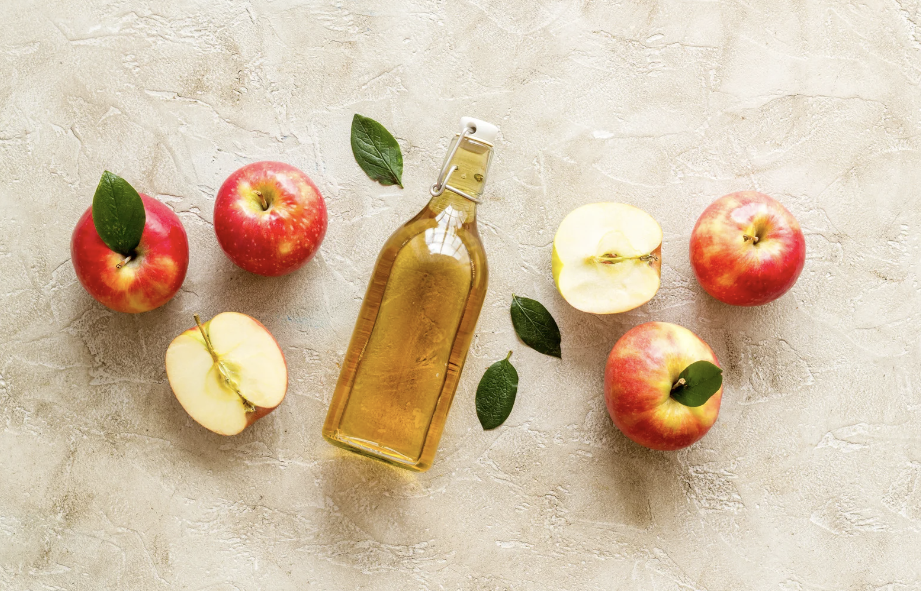
Many proclaim that apple cider vinegar (ACV) has benefits for many health conditions. From managing glycemia in the context of diabetes, to reducing «harmful» bacteria, to cardiovascular health including cholesterol management, this food is promoted as an aid to the management of many conditions. Digestive health is no exception!
What does science have to say?
Benefits for gas and bloating?
PCV is manufactured from fermentation of apples by yeast to be transformed into alcohol. Bacteria are then added to convert the alcohol into acetic acid (vinegar).
Some mention that PCV can help manage digestive symptoms such as gas and bloating. However, this has not been scientifically proven.
Conversely, some studies report that PCV slows gastric emptying (evacuation of stomach contents into the intestine), which can worsen symptoms of reflux and bloating.
In a study of 10 subjects with type 1 diabetes (on insulin) suffering from gastroparesis (slowed gastric emptying), PCV further slowed gastric emptying in the participants. They also reported more symptoms of gas and bloating. Despite the small number of subjects, this study seems to observe the opposite of the benefits of PCV.
Since bloating can be caused by a number of factors, it is important to «to »investigate" the causes before even thinking of taking supplements.
To learn more about managing digestive discomfort, read this article:
Stool benefits?
Since PCV contains pectin from apples, a fiber that's good for intestinal transit, It would be logical to believe in its benefits for intestinal regularity. Unfortunately, the science on the latter is absent! What's more, the amount of pectin present at the end of fermentation is negligible, and therefore insufficient for the potentially desirable effects. Biting into an apple is more effective!
Benefits for the stomach?
One potential theory is that PCV increases stomach acid, which in turn aids digestion, especially when stomach acid levels are low. Indeed, some have suggested that acid reflux symptoms may be caused by lower acid production, not excess! Thus, lack of stomach acid can impair digestion, creating greater fermentation of food and, consequently, gas!
On the other hand, no science No studies have demonstrated these mechanisms or the benefits of using PCV on the stomach. As mentioned above, slowing gastric emptying may actually be more harmful than helpful in the context of reflux.
To find out more about reflux and nutritional recommendations, read this article.
Possible side effects
PCV is generally safe, especially when consumed in small quantities. However, its acidity can damage the health of teeth. Avoid direct contact with teeth (e.g. by using a straw), and rinse your mouth thoroughly after use to help reduce the damaging effects of tooth enamel erosion. In some cases, long-term or high-dose use can also cause burning of the esophagus, damage to the esophageal mucosa, aggravate ulcer symptoms and reduce blood potassium.


How to integrate it?
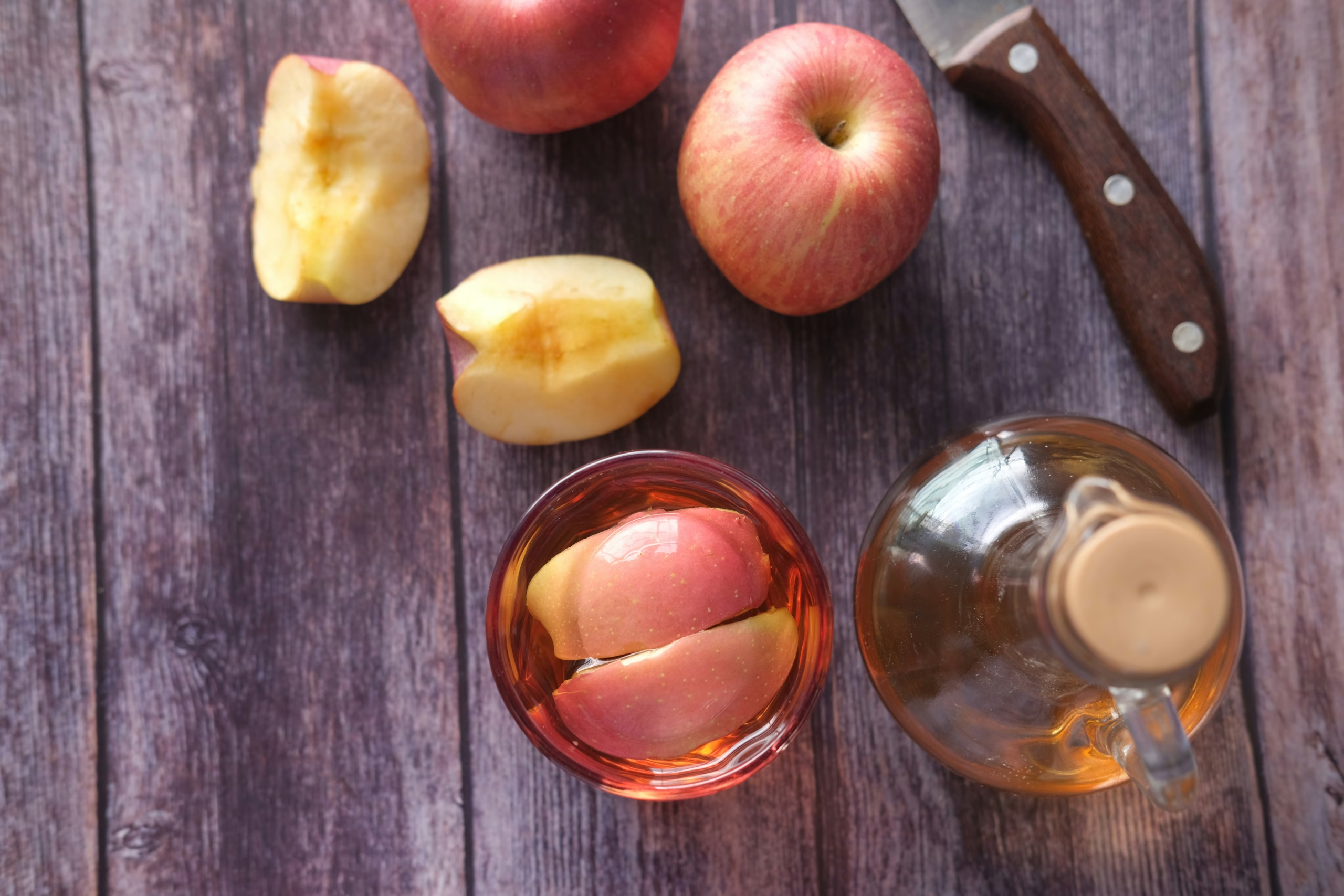
PCV can be added to water or other liquids such as teas or smoothies. Of course, it can also be added to meals in vinaigrettes and mayonnaises, or on vegetables that we like to «vinegarize», such as radishes, carrots, onions and cucumbers.
An amount of 1 to 2 tablespoons (15-30 ml) 1 to 2 times a day seems to be favourable. Some suggest this quantity before or after meals, but no data supports this dosage.
When you buy a MLV, it's important that it contains the «mother». This is a layer of yeast, enzymes, proteins and acetic bacteria that forms naturally during fermentation. In filtered products, this «mother» is removed, while the potential benefits of the product are lost. might find themselves in these bacteria. The aim is an «organic» product with a cloudy (not transparent) appearance.
There are also gummies or VCP tablets. Potentially, the benefits of this form are also present in similar quantities. On the other hand, no science was carried out with the gummies or tablets only for PCV.
Before adding any extras, including VCP, always check with a healthcare professional (doctor, pharmacist) whether this product is suitable for you.
PCV can be a great addition to your recipes!
However, the benefits observed are very limited in terms of digestive health! A personalized approach is essential, depending on your digestive symptoms, to validate its relevance.
References
Ahuja et al (2019) Popular Remedies for Esophageal Symptoms: a Critical Appraisal. Curr Gastroenterol Rep Jul 10;21(8):39. https://pubmed.ncbi.nlm.nih.gov/31289950/
CDHF (Canadian Digestive Health Fundation) (2022) Apple Cider Vinegar for Digestion. What's the Deal? https://cdhf.ca/en/apple-cider-vinegar-for-digestion-whats-the-deal/
Healthline (2020) How to Use Apple Cider Vinegar for Bloating. https://www.healthline.com/health/apple-cider-vinegar-bloating#TOC_TITLE_HDR_1
Healthline (2023) Apple Cider Vinegar Dosage: How Much Should You Drink per Day? https://www.healthline.com/nutrition/apple-cider-vinegar-dosage
Healthline (2023) Apple Cider Vinegar Pills: Should You Take Them? https://www.healthline.com/nutrition/apple-cider-vinegar-pills
Healthline (2024) 6 Health Benefits of Apple Cider Vinegar, Backed by Science. https://www.healthline.com/nutrition/6-proven-health-benefits-of-apple-cider-vinegar#summary
Hlebowicz et al (2007) Effect of apple cider vinegar on delayed gastric emptying in patients with type 1 diabetes mellitus: a pilot study. BMC Gastroenterol Dec 20;7:46. https://pubmed.ncbi.nlm.nih.gov/18093343/
The IBS Dietitian (2022) Does Apple Cider Vinegar Help With IBS and Digestive Health? https://thefoodtreatmentclinic.com/apple-cider-vinegar-ibs/
The IBS & Gut Health Clinic (2021) Apple Cider Vinegar For IBS: Does It Help? https://ibsguthealthclinic.co.uk/apple-cider-vinegar-for-ibs/
Schulz et al (2022) Effectiveness of Nutritional Ingredients on Upper Gastrointestinal Conditions and Symptoms: A Narrative Review. Nutrients Feb 5;14(3):672. https://pubmed.ncbi.nlm.nih.gov/35277031/
 French
  English