
Menopause is an unavoidable stage in a woman's life, often accompanied by bodily changes, including weight gain.
What does science have to say? What are the underlying mechanisms?
Key figures
- Between 50 and 70% of women report weight gain during the menopause transition (1)(3).
- An average weight gain of 1.5 kg (3.3 lb) per year is reported, for a total of 10 kg (22 lb) during the perimenopausal period (1).
- Weight gain is predominantly abdominal, with an increase in waist circumference. (1)(2)(3)
What is menopause?
Menopause refers to the period in a woman's life when her periods stop for good and she can no longer conceive a child. (4)(5)
The period preceding menopause is known as the menopausal transition or perimenopause. (4)
Most women begin the menopausal transition between the ages of 45 and 55, and the process can last several years. (4)(5)
Possible symptoms (4)(5):
Hot flashes
Night sweats
Sleep disorders, insomnia
Irregular periods, heavy bleeding
Joint and muscle pain
Pain during intercourse, vaginal dryness, incontinence
Mood swings and irritability, anxiety, depression
Difficulty concentrating, forgetfulness
Why do we gain weight during menopause?
Several studies have looked at why women gain weight during this period.
Here are a few clues reported in current science to explain this trend (1)(2)(3) :
Hormonal changes: reduction in estrogens and increase in androgens
- Favors an increase in abdominal adiposity: low estrogen and high androgen levels lead to a redistribution of fat from the gluteal and femoral (thigh) regions to the abdominal areas of the body;
- Reduced basal metabolic rate and muscle mass: estrogen acts directly on muscle stem cells to promote muscle maintenance, regeneration and repair, effects which are attenuated after menopause. There are also reports of an increase in inflammatory markers which promote muscle breakdown;
- Impact on hunger and satiety signals: During the menopausal transition with fluctuating estrogen levels, its effectiveness in modulating hunger hormones is reduced. Menopausal women experience more intense hunger signals, encouraging increased food intake and cravings, which in turn promotes weight gain.
Different lifestyle habits
- Less balanced diet, more processed foods, more food cravings;
- Reduced physical activity.
The diagram below illustrates the mechanisms that can lead to weight gain during menopause:
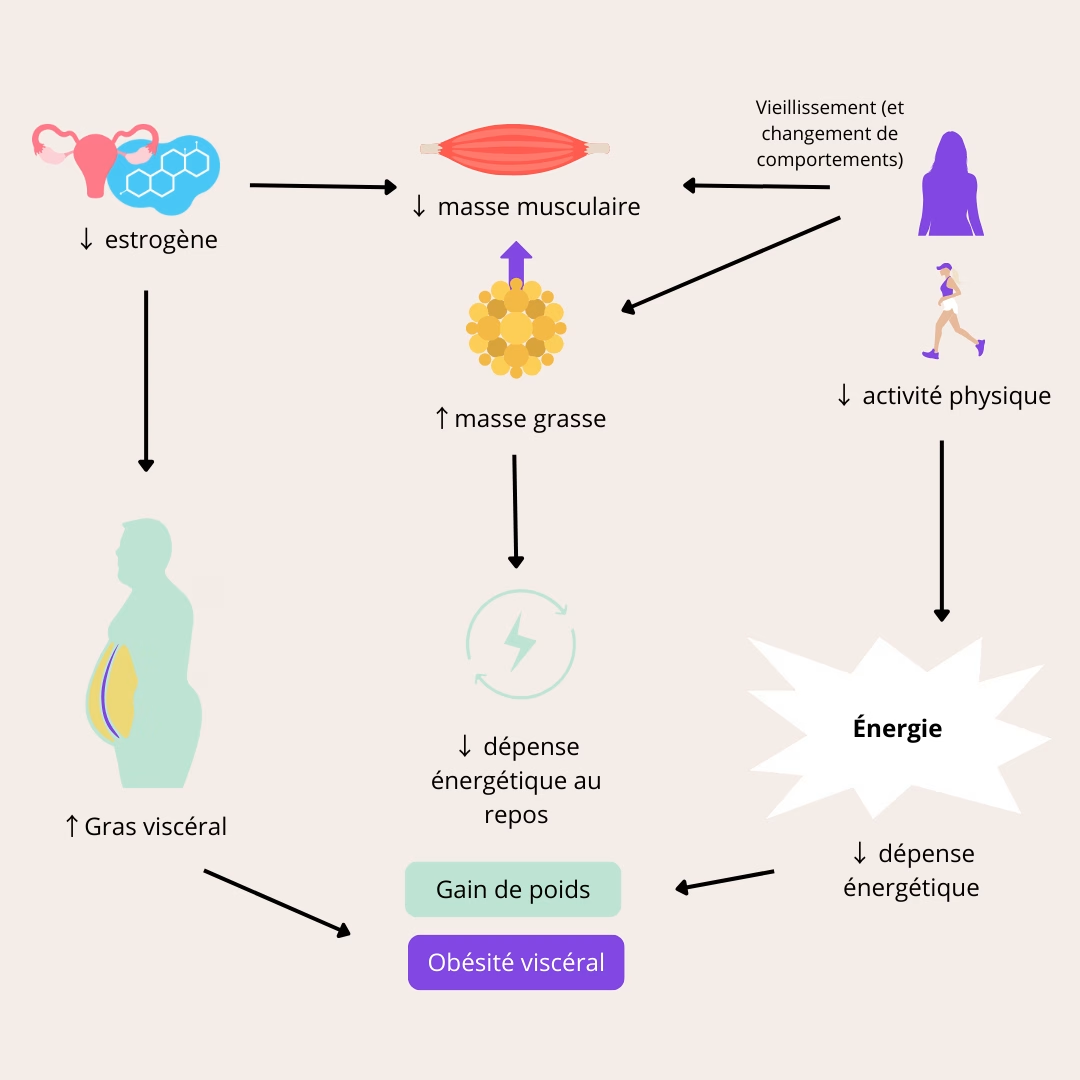
Adapted from Hurtado et al (2024) (3)
Possible courses of action
Various strategies are available to help reduce weight gain during menopause.
Avoid drastic or restrictive diets, especially those that exclude certain food groups (e.g. carbohydrates, starches, sugars, fats, "junk" foods).
Aim for a balanced diet that favours plant foods and fibres such as vegetables, fruit, legumes, nuts, seeds, whole grains, flax and chia seeds.
Focus on protein (chicken, fish, seafood, eggs, legumes, tofu, edamame, dairy products, nuts, seeds) at every meal and at snacks (if needed). A good protein intake helps stabilize hunger and limit the loss of muscle mass.
Follow the principles of the Mediterranean diet. To find out more about this diet : read this blog article on the subject.
Integrate more physical activity, not just cardiovascular exercise, but more weight training and resistance exercise.
Pay attention to the number of alcoholic drinks per week.
Question real (true) hunger between meals. Be aware of snacking and cravings between meals.
Snack between meals according to hunger.
Eat slowly (15-20 minutes per meal) and consciously in the absence of screens or work.
In conclusion
- The menopause period is associated with weight gain in most women.
- Various biological mechanisms explain these bodily changes during this period.
- Various nutritional recommendations can help reduce the impact of these changes.
- Personalized nutritional support with a dietitian-nutritionist will enable you to establish different strategies for eating habits to promote physical and mental well-being. Menopause-specific recommendations for calcium, iron, phytoestrogens, vitamin D and omega-3 will also be discussed at your meetings.
References
(1) British Menopause Society (BMS) (2023) Menopause: Nutrition and Weight Gain. https://thebms.org.uk/wp-content/uploads/2023/06/19-BMS-TfC-Menopause-Nutrition-and-Weight-Gain-JUNE2023-A.pdf
(2) Chopra et al (2019) Weight Management Module for Perimenopausal Women: A Practical Guide for Gynecologists. J Midlife Health. Oct-Dec;10(4):165-172. https://pubmed.ncbi.nlm.nih.gov/31942151/
(3) Hurtado et al (2024) Weight Gain in Midlife Women. Curr Obes Rep. Jun;13(2):352-363. https://pubmed.ncbi.nlm.nih.gov/38416337/
(4) National Institute on Aging (2024) What is menopause? National Institutes of Health (NIH). Page consulted online : https://www.nia.nih.gov/health/menopause/what-menopause
(5) World Health Organization (WHO) (2024) Menopause. Page consulted online : https://www.who.int/fr/news-room/fact-sheets/detail/menopause
 French
  English