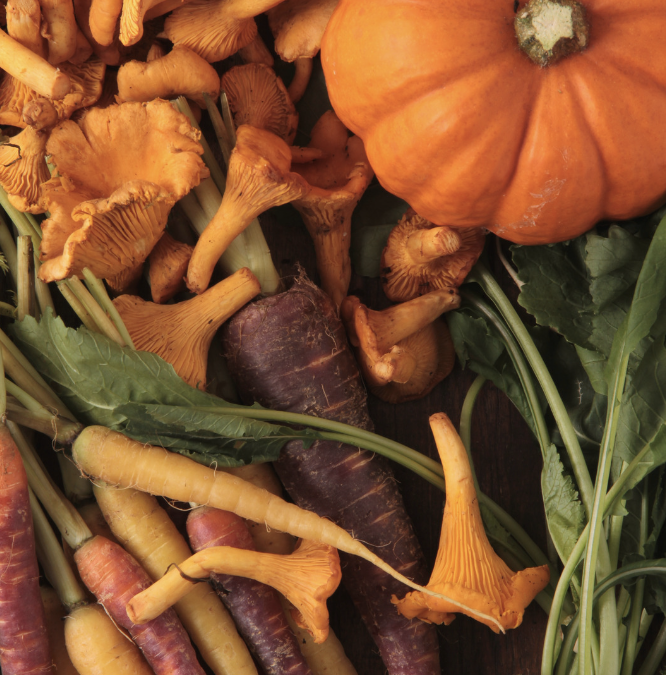
With the arrival of autumn, comfort in the kitchen is the order of the day.
This includes, of course, digestive comfort!
If you are sensitive to fermentable fibers (FODMAP) or that you are in the process of eliminating FODMAP with your nutritionist, Here are a few vegetables you can incorporate into your menu.
Red, white or sweet potatoes
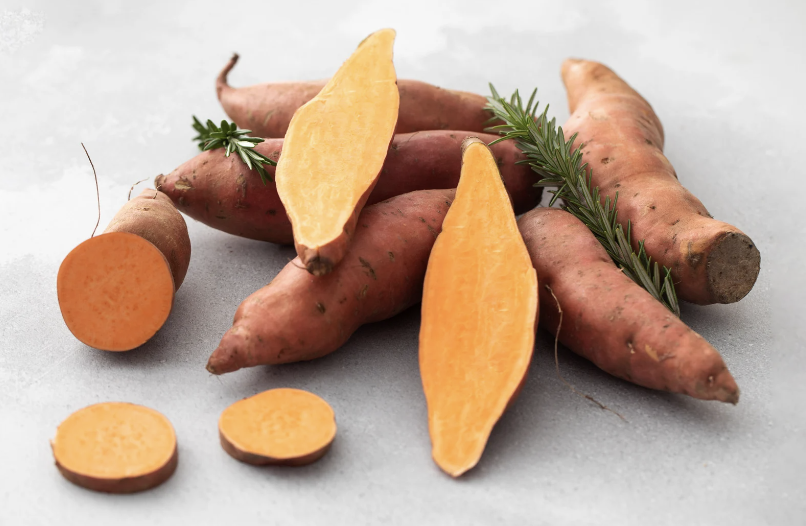
Did you know that sweet potatoes contain a total of.., twice as much fibre than the traditional white potato? It's a great reason to add it to your menu, not to mention the fact that it's high in beta-carotene, an antioxidant.
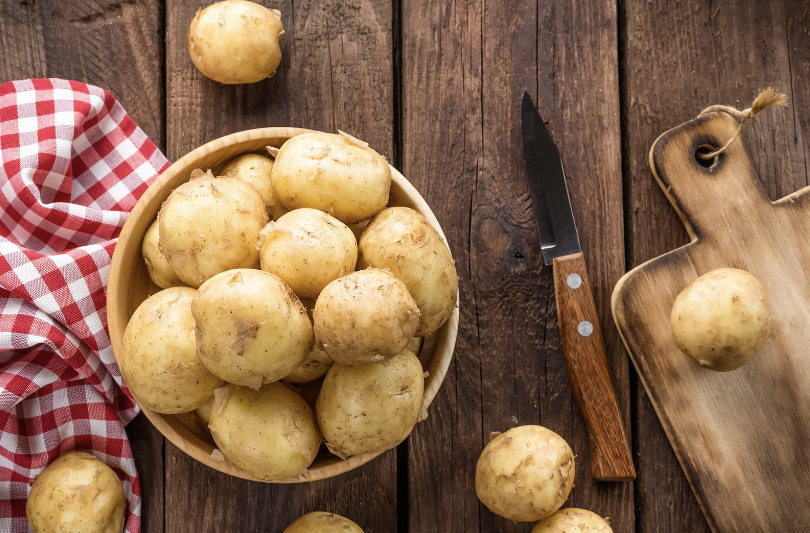
The traditional white potato also has its place on the plate. Unlike the sweet potato, which is richer in soluble fiber, the white potato has a high proportion of insoluble fiber. What's more, a single white potato provides around 50% of the daily requirement of fibre. vitamin C !
Why do potatoes change color when cooked?
This is due to enzymatic browning. Potatoes, like many other fruits and vegetables, contain polyphenol oxidases. They are an enzyme which, on contact with oxygen, causes browning. As a bonus, they contain other phenolic compounds and are high in copper, which promotes the browning process.
There is no health hazard, apart from an undesirable color change.
A few tips to reduce browning:
- Add an acid (e.g. vinegar)
- Add an antioxidant (e.g. citric acid such as lemon juice)
- Keep them in water
Which potato for which use?
- Sweet potato: meal bowls, oven fries, vegetarian hamburger patties, chilis, desserts (e.g. brownies, energy balls, muffins), tacos, Mexican-inspired meals
- Russet, Idaho, Bake King (flaky consistency) French fries, baked potato, mashed potato
- Red bliss, Red creamer, Red Pontiac, White rose, Chieftain (round shape, smooth white or red skin with a waxy consistency)) salads, casseroles, gratins
- Yukon Gold, Kennebec, Yellow finn, Purple peruvian (intermediate)versatile, good for purées
Parsnips
Parsnips look like white carrots!
It is eaten raw, in sticks, like carrots, but it is also a vegetable of choice for various cooked dishes:
- Soups
- Purées
- Grated into a salad
- Grilled on the griddle or BBQ
- Stews
This root vegetable has a fibre content of around 2 g for a 125 ml (½ t.) serving.
White vegetables are rich in prebiotics. Prebiotics are the food intestinal bacteria to break down fiber and release health-promoting metabolites! What's more, they optimize the absorption of various minerals and vitamins such as iron, zinc, copper, magnesium, calcium and vitamin E. vitamin B12.

Turnip
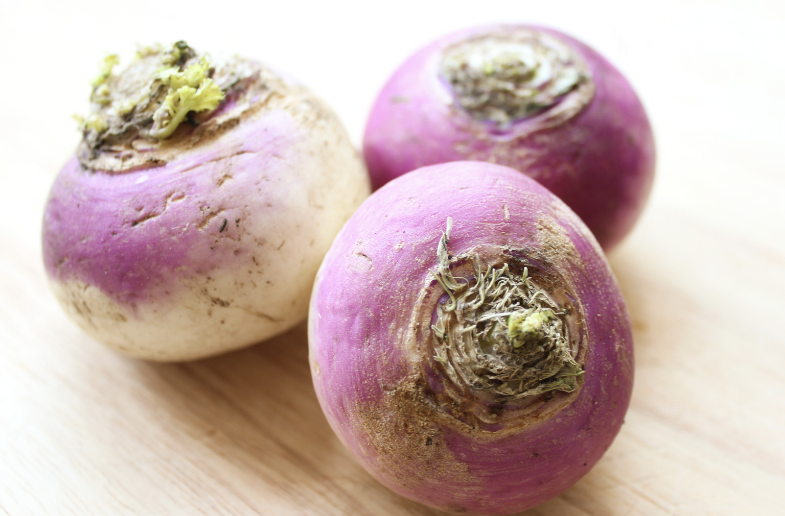
Another root vegetable similar to carrots, turnips can be eaten raw or cooked, and prepared in the same way. In gratins, purées, stews, soups and salads, turnips are delicious! This vegetable is a good source of vitamin C and insoluble fiber. Drizzled with a little vegetable oil and baked in the oven, turnips make crispy home fries.
Its leaves are also edible, in the same way as spinach. Throwing them away would be depriving yourself of carotenoids (antioxidants) they contain!
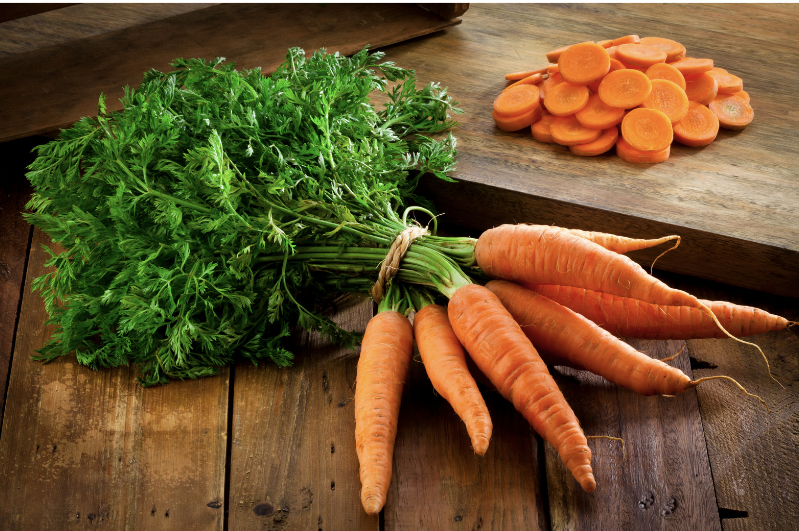
Carrot
Carrots, with their vibrant orange colour, are an excellent source of carotenoid which, once in the body, can either be bio-converted into vitamin A or act as an antioxidant against free radicals.
A 125 ml (½ cup) serving of raw carrots provides 1.6 g fibre with a fairly even soluble/insoluble distribution.
Otherwise, they are welcome in salads, sandwiches, snacks (e.g. oatmeal, bars, muffins, patties), soups and soups.
Myth or reality: Carrots give you good vision?
It's a fact that since carrots are a source of vitamin A, they help to supporter eye health. Retinal (derived from vitamin A) is a component of the eye's retina and helps to ensure the process of night vision. In no case, however, can a surplus of carrots or vitamin A improve or reverse an eye problem. Beyond the eyes, vitamin A is beneficial for the immune system, epithelial tissues (e.g. cornea, skin, digestive epithelium), growth, reproduction and even hematology.
Cabbage
In the large cabbage family, kohlrabi, white, red or green cabbage and Chinese cabbage are the most popular. low in FODMAP for any raw portion weighing 75 g or less.
Source of vitamin K, folate (vitamin B9) and vitamin C, cabbage is also known for its richness in various antioxidants, depending on the plant. the color of its leaves.
Why does cabbage make you bloated?
Cabbage is sometimes disliked by some because of the discomfort it can cause. In fact, for a portion larger than 75 g, the presence of fructan, a fermentable carbohydrate, is a source of pleasure for intestinal bacteria.
Use in moderation and listen to your symptoms. Also, try fermented cabbage such as sauerkraut and kimchi. These foods have been, in part, fermented by bacteria, reducing the volume of fermentation remaining in your own intestine and thus limiting potential gas and bloating.

Spaghetti squash
Vegetable spaghetti - that's what spaghetti squash sounds like! Indeed, once cooked, the flesh unravels, forming fine spaghetti-like strands.
As a result, it's a great option for substitute pasta, as a salad or to make vegetable or fish cakes.
Each 125 ml (½ cup) serving of cooked spaghetti squash yields 1 g fiber plus manganese, magnesium and B vitamins.

References
- Alexandrine Gamache, MSc, Lecturer at Université de Montréal. Course Notes: Food Science, BAC en nutrition (2024)
- Bélanger,M. LeBlanc,M. Nutrition: 5th edition. (2021). Édition Chenelière Éducation.
- Bender et al. Harper's Biochemistry (6th ed.). (2017). Édition de Boeck Supérieur.
- Authors' collection (produced in partnership with the Académie Culinaire and INAF). The visual encyclopedia of food (new edition). (2017). Les Éditions Québec Amérique.
- Government of Canada (2019). Canadian Nutrient File (CNF). https://aliments-nutrition.canada.ca/cnf-fce/?lang=fre
- Harvard University Health Services. (May 2004). Fiber Content of Foods in Common Portions. https://cookwithkathy.files.wordpress.com/2014/05/sifibre.pdf
- North Ottawa Wellness Foundation. (n.d.). Soluble & Insoluble Fiber Foods List. https://www.northottawawellnessfoundation.org/wp-content/uploads/2017/11/NOWF-Fiber-Content-of-Foods.pdf
 French
  English